
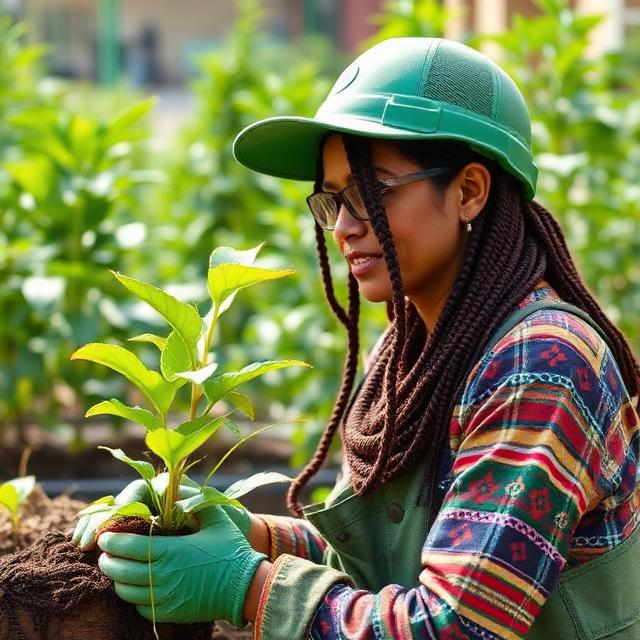
When women are excluded from the green economy, we lose more than talent. We lose resilience, innovation, and half of the solutions that a sustainable future demands. Green skills are like the roots of a tree. If women cannot access them, the economy above the ground may grow, but it will never be stable.
The silent gap in a growing sector
Across the world, the transition to sustainable economies is gathering speed. Clean energy, climate-smart agriculture, sustainable construction, and circular supply chains are becoming the backbone of global growth. The International Labour Organization estimates that a shift to a green economy could create 24 million new jobs by 2030. Yet even with this promise, women are underrepresented in most of these roles.
In India, the gender gap in the workforce is already one of the widest among emerging economies. Women’s labour force participation hovers around 25 percent, according to World Bank data. When we look specifically at green jobs, the numbers are even lower. The contradiction is stark. We are building the future, but continuing with the exclusions of the past.
Defining what green skills really mean
To address this gap, we must first be clear about what green skills are. Green skills are not just technical abilities like installing solar panels or managing waste treatment plants, although those are critical. They also include cognitive and interpersonal competencies that drive sustainability, like systems thinking, problem solving, and collaboration across disciplines.
The Future Right Skills Network (FRSN) frames green skills as part of the broader spectrum of future-ready skills. These are the competencies that prepare young people for quality work and resilient career pathways in a rapidly evolving job market. For women, acquiring green skills is not simply about employability. It is about empowerment, agency, and participation in shaping the industries of tomorrow.
Break the barriers that hold women back
Even when training opportunities exist, barriers often prevent women from accessing them. Social expectations around unpaid care work, lack of childcare facilities, and safety concerns during travel limit women’s ability to participate in vocational education. Many green jobs are in sectors historically coded as male, such as energy or construction, which adds another layer of cultural resistance.
Bridging this gap requires systemic interventions. Training programs must include provisions that recognise and address these structural challenges. Institutions must invest in support systems that make learning environments truly inclusive. Without this, women will remain on the margins of green job opportunities, even if curricula are updated.
Make institutions aspirational, not just functional
If training centres are to play their role in the green transition, they cannot remain transactional spaces where skills are delivered without vision. They must become aspirational institutions that inspire confidence and ambition, especially for women. This means investing in gender-sensitive infrastructure, creating mentorship opportunities, and ensuring that trainers are role models whose journeys reflect possibility.
FRSN’s work in the ITI ecosystem transformation highlights how institutional reform can shift outcomes. By focusing on trainer development, curriculum innovation, and capacity building, ITIs can evolve from underutilised facilities into hubs of future-ready learning. For women, such a transformation is essential. It signals that the system sees them not as exceptions, but as central to the skilling agenda.
Industry must create real pathways
The private sector often speaks about the importance of diversity, but the green economy demands more than symbolic gestures. Industries must design pathways that actively bring women into sustainable roles. This includes transparent recruitment, equitable pay structures, and structured mentorship programs.
An industry skills framework aligned with future-ready skills can serve as a roadmap. By articulating the competencies required in renewable energy, sustainable agriculture, and other green sectors, the industry can work with training institutions to ensure women are prepared for real opportunities. For businesses, this is not just a matter of social responsibility. It is a way to build a pipeline of skilled workers that can meet future demand.
Policy must listen to women’s voices
Policy is central to scaling systemic change. Initiatives by the Ministry of Skill Development and Entrepreneurship have laid the foundation for integrating future skills into national priorities. But policies are effective only when they are informed by lived experiences. Women must be part of the conversation, not simply recipients of programs designed without their input.
FRSN’s approach emphasises evidence-led advocacy and peer learning. By amplifying voices from the ground, especially women who are navigating training and employment, strategies become more relevant and effective. A just transition to a green economy cannot be designed in isolation. It must emerge from collaboration, where government, industry, and civil society co-create solutions that reflect the realities of women’s lives.
Collective action is non-negotiable
Closing the gender gap in green jobs requires an enabling ecosystem. No single actor can drive this transformation. Government must mainstream innovation into policy. Industry must commit to building pathways. Civil society organisations must advocate for inclusion and provide community-level support. Funders must invest in scalable, systemic change.
FRSN positions itself as an orchestrator of India’s future-ready skilling ecosystem. Through the K&I Community, we bring stakeholders together for peer learning, joint advocacy, and co-owned transformation. From pilots to policy, this collaborative approach ensures that the green transition is not only technologically advanced but socially inclusive.
The future cannot be built without women
The green economy offers immense promise, but it also carries a risk. If women are excluded, we replicate old inequities in new industries. If they are included, we create pathways for shared prosperity and resilience.
Women and work are inseparable from the story of sustainable growth. Equipping women with green skills is not an optional extra. It is a strategic imperative for India’s future. The question is not whether women belong in the green economy. The real question is whether the green economy can thrive without them.
